

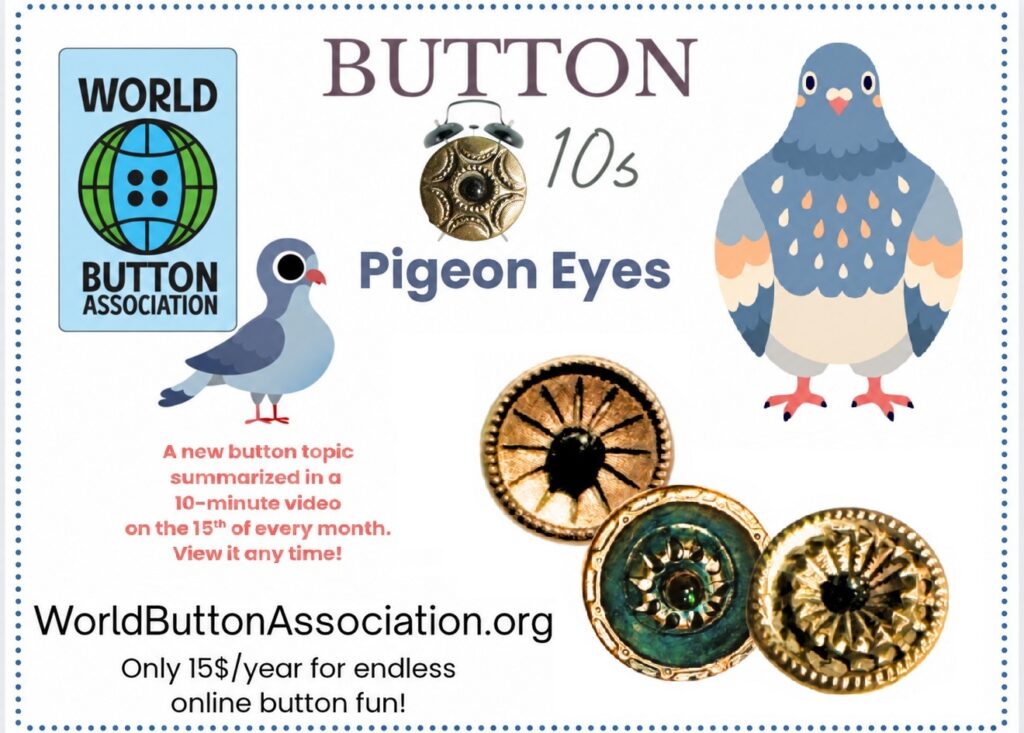
The 7-minute PIGEON EYE video is ready!
Learn about this interesting button term in just seven minutes, from the construction of these multi-pieced, small metal buttons of the 1800s to the placement on the button face of a little glass ball resembling the glistening eye of a pigeon.
AN AFTER-SHOW AH-HA MOMENT–Taking Another Look at My Buttons
by Debbie Allnutt
Years back I stopped entering button competitions. No particular reason—I just stopped. I had my share of blue, red, and green ribbons, but they weren’t incentives and suddenly, they seemed much less so.
Then just as suddenly, it seemed time to start competing again. My state’s spring show was on the horizon, and I had written and submitted two awards. The first was an award for moonglows. The second was for shapes specialized to anything but round, i.e., hearts, spindles, rectangles, squares, etc. It was after this competition that I began to look at my buttons …. Read the rest of this article …
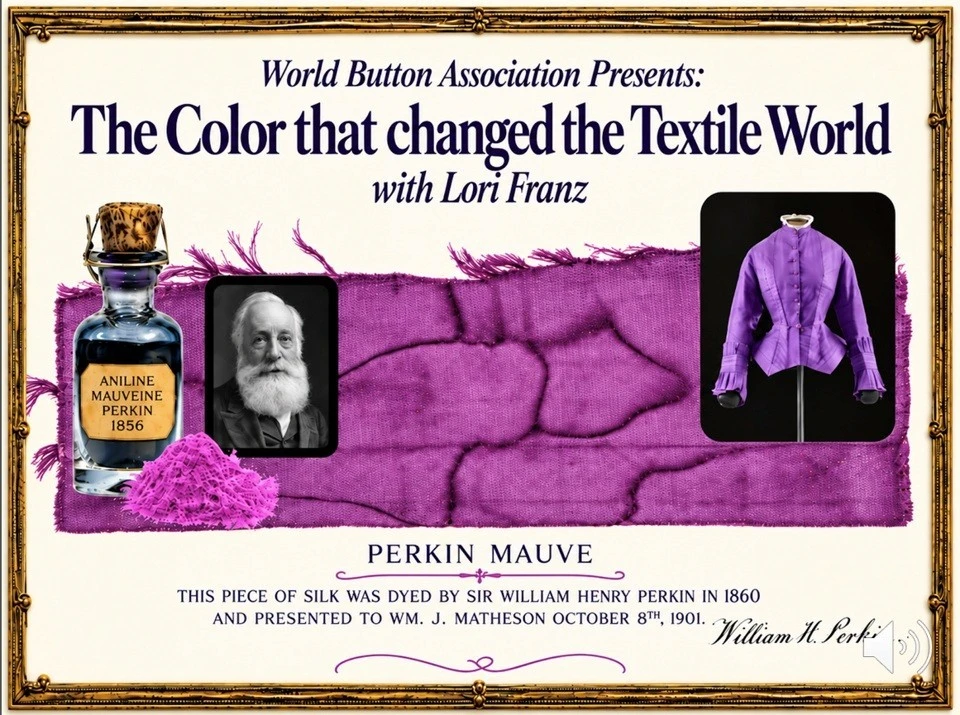
PERKIN MAUVE
Lori Franz leads viewers on a fascinating journey starting with the history of textile colors and leading to the 19th century discovery which resulted in an explosion of color. The chemist William Perkin, searching for a medical product, created a beautiful mauve that shook up the fashion world. Watch this stunning presentation at your convenience!
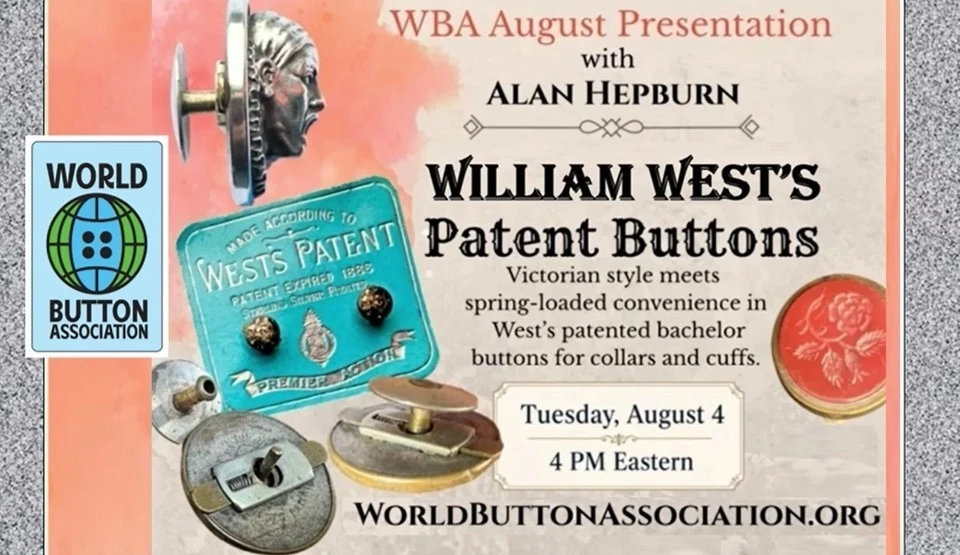
WILLIAM WEST’S PATENT SPRING SOLITAIRE buttons were the rage when produced in 1872 and these intricate button backs appear with some of the finest and most beautiful materials and workmanship of the 18th Century. Alan Hepburn provides a detailed introduction to the spring solitaire button back in this video, which compliments the four articles he authored that can be found on this WBA website.
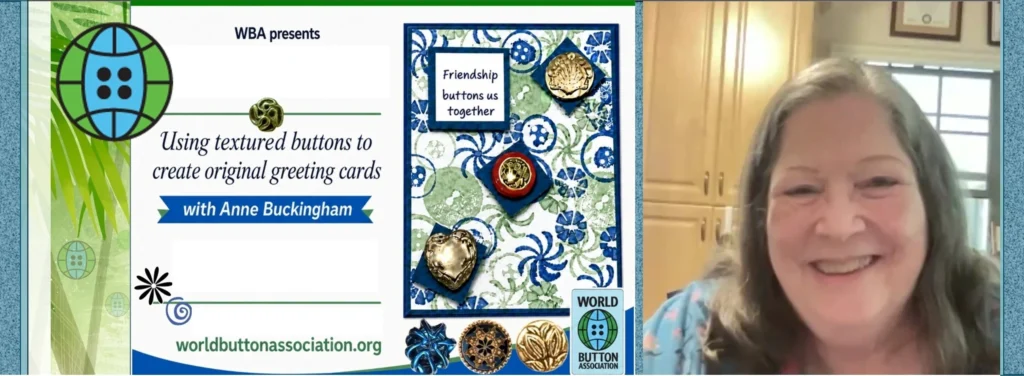
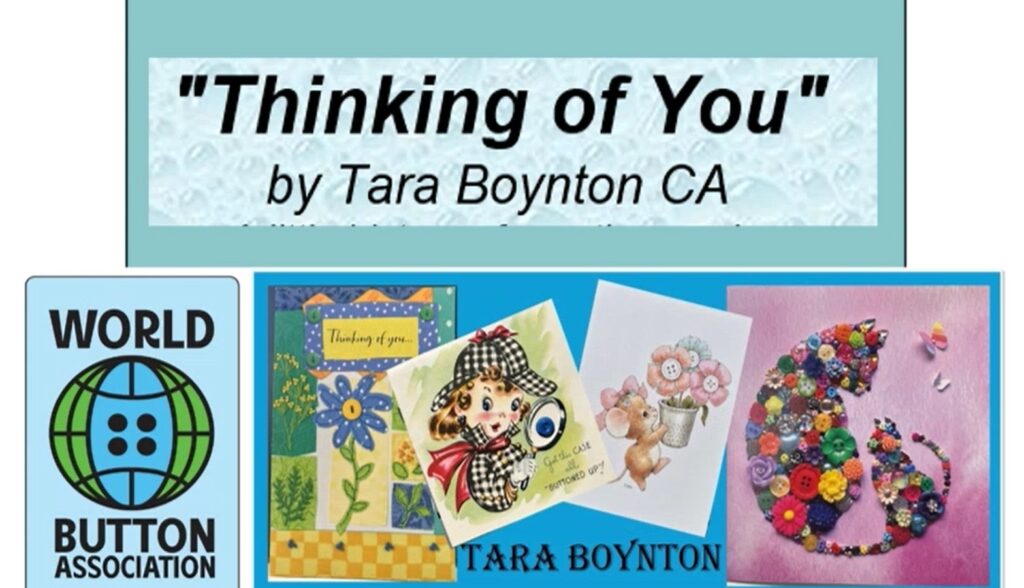
Learn ANNE BUCKINGHAM’s step-by-step method to create uniquely personal greeting cards using textured buttons! For those of you who missed this fun 5th Tuesday presentation, click here to watch the nine-minute video.
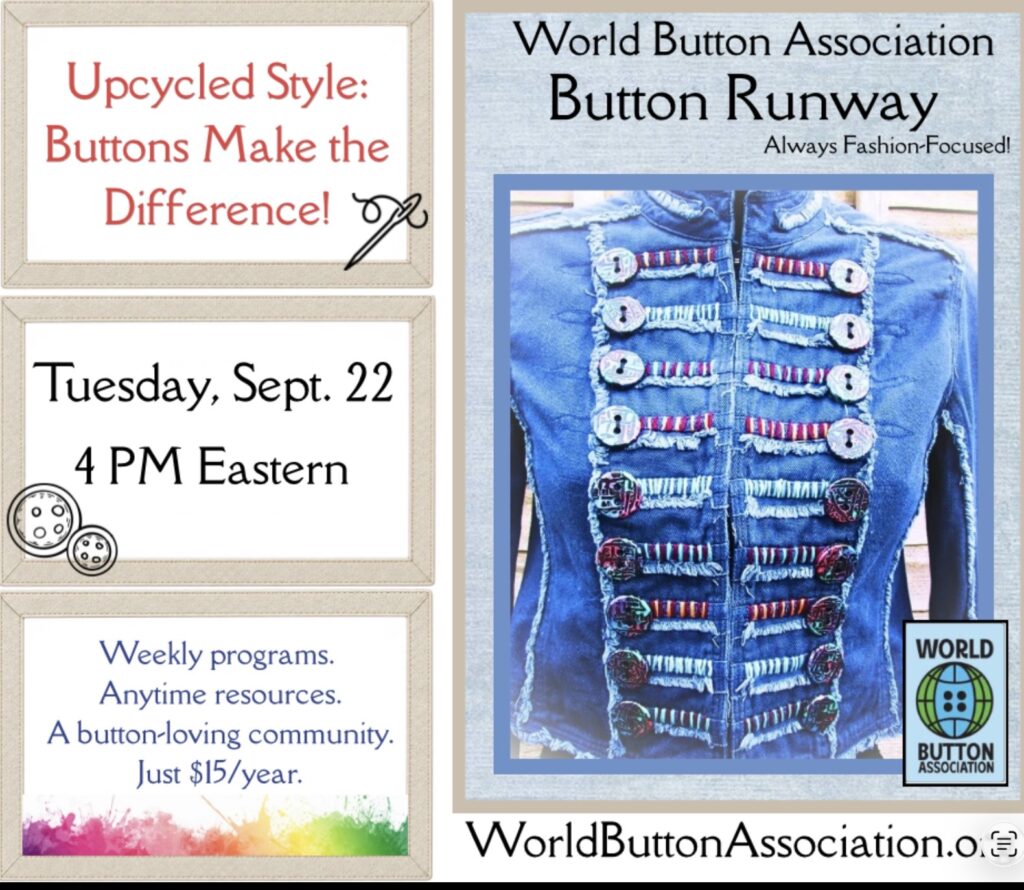
In case you missed it, you can now watch the video UPCYCLED STYLE: BUTTONS MAKE THE DIFFERENCE!
Referenced in the video are the Facebook videos of Ms. Angela Sawyer, and you can check out her fun sewing and creative projects by clicking the link Also referenced are the charming ideas on Facebook posted by Paper Craft, which you can also check out here. If you want to see only BUTTON craft and sewing ideas, then search that Facebook site for Buttons.
INTERACTIVE BUTTONS — An Enjoyable Pursuit
by Jocelyn Howells
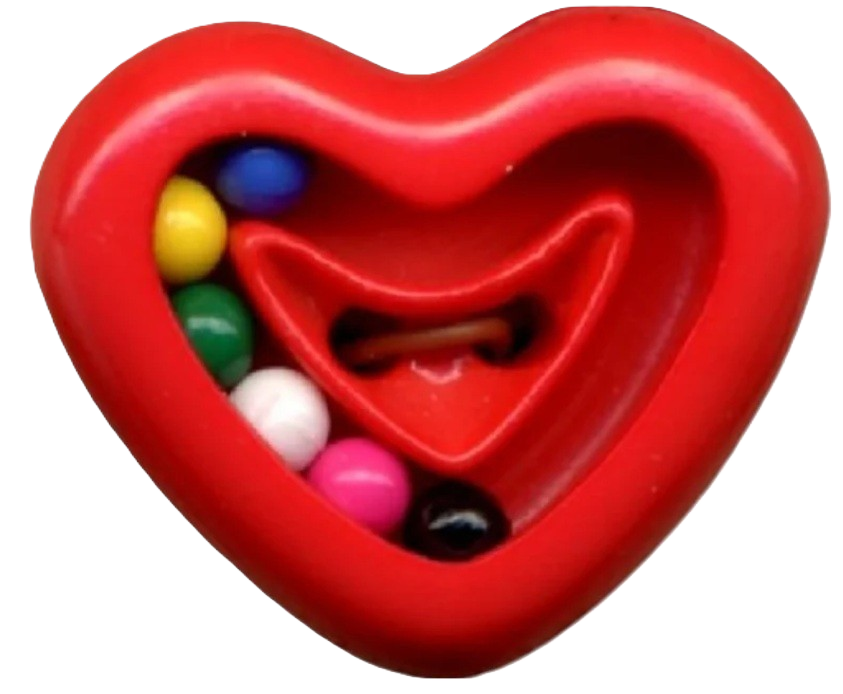
Button manufacturers have been very imaginative and clever with their creations. We recognize parts that move on buttons. Can we recognize additional aspects of buttons that DO something or have other interactive qualities? Read the whole article here ….
DENZEL WASHINGTON LINKS TO BUTTON COLLECTING
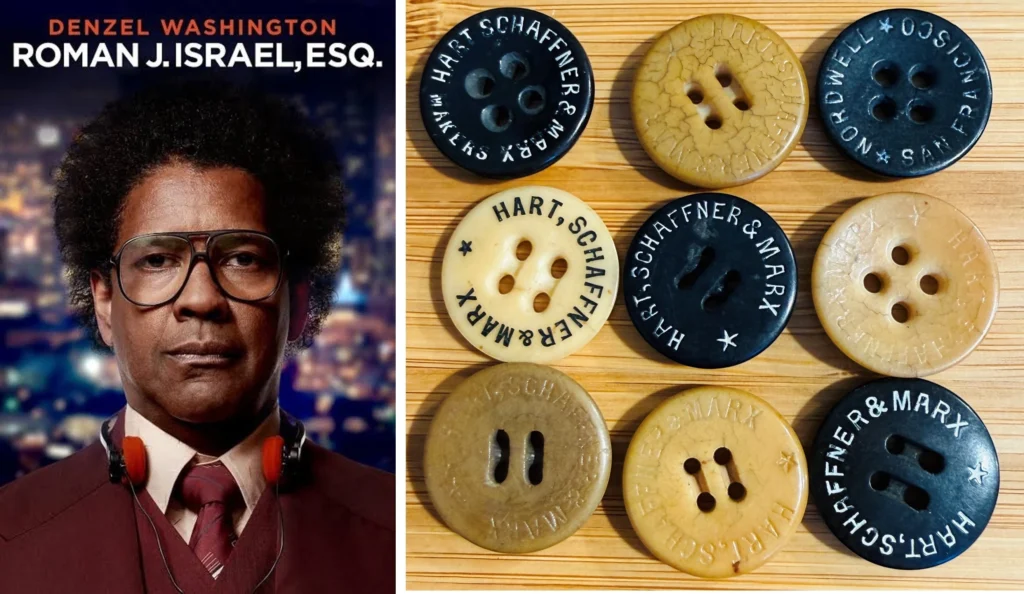
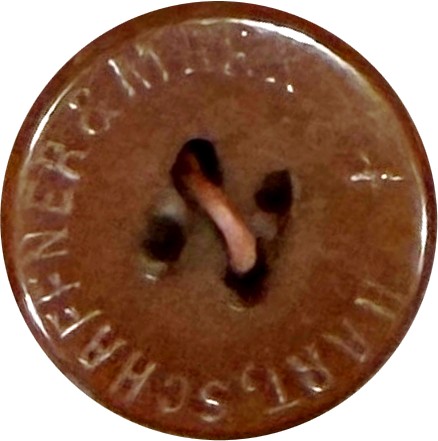
How does Denzel Washington link to button collecting? Did you see his 2017 movie “Roman J Israel, Esq.”? If you did, you may recall that he bought three new suits. Did you notice that those suits came from Hart, Schaffner & Marx? Check out his shopping bags as he leaves the store and walks down the street!
Poke through any baggie of old antique vegetable ivory clothing buttons with tailor and clothing brand names, and you will recognize the name of Hart, Schaffner & Marx (HSM). They’ve been dressing gentlemen since 1872! To learn more, visit the WBA Encyclopedia.
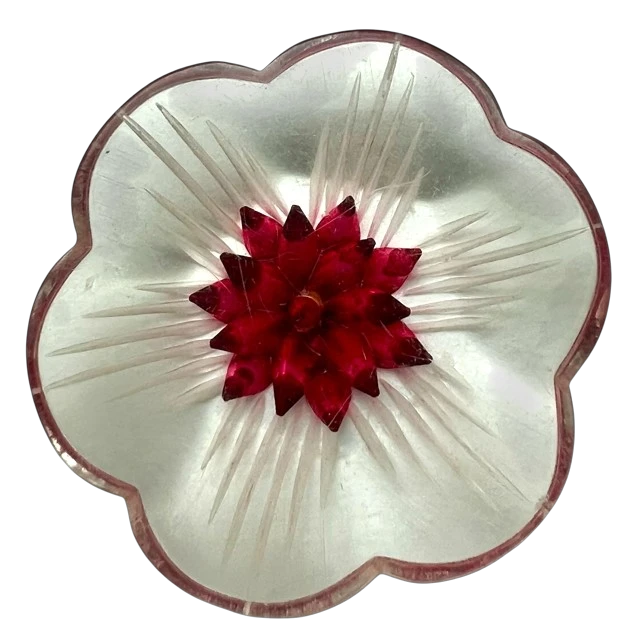
ACRYLIC (Lucite, Plexiglass, Perspex, Uvex, Crystallite, Pontalite, Acrylite, etc.)
by Mary Pat Whaley
I don’t know why certain buttons and certain materials speak to each of us, but I have always had a special place in my heart for acrylic. Maybe it’s the space-age look and feel that reminds me of my youth in the 1960s. Maybe it’s the fascinating illusion of acrylic’s light-reflecting power that causes one to look twice to see if the colors and the carvings are on the front, on the back, or in the middle of the button. Acrylic has the power to become glass, water, ice, a mirror, or a tiny world within a world. It has the power to create buttons sleek and simple, or colorful and complex. Read more ….
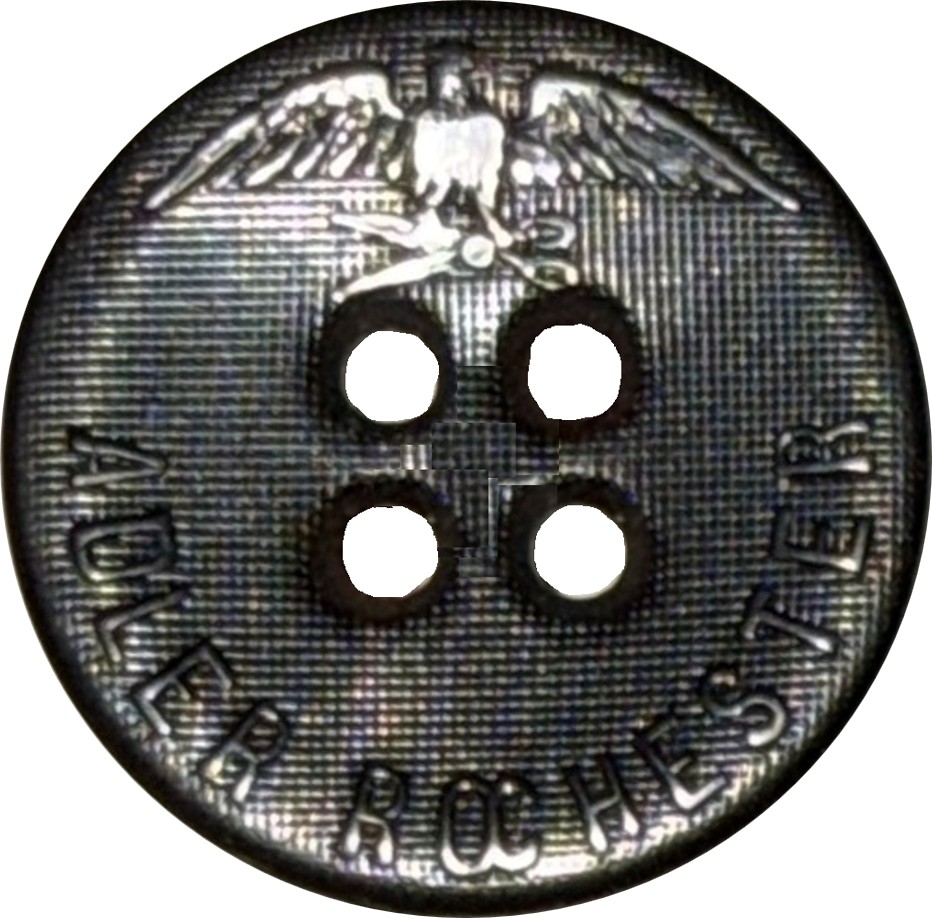
ADLER ROCHESTER
Adler-Rochester clothing, established in 1883 and operating until 1951, produced expensive ready-to-wear mens suits and coats which compared directly to luxury tailor-made pieces.
The company logo included an eagle because “adler” in German means eagle, and some of their buttons include the eagle holding a pair of open sewing scissors.
WBA FUNDRAISING
At each Fall and Spring Social, WBA will support button artisans, groups working to develop self-sufficiency, or groups encouraging creative women. So far that has included Haiti, rural Appalachia, and India. 100% of the proceeds from this 2026 fall button sales event will go to AMURTEL, a nonprofit responding to the challenges faced by women and children to develop economic and social strength across all areas of life.
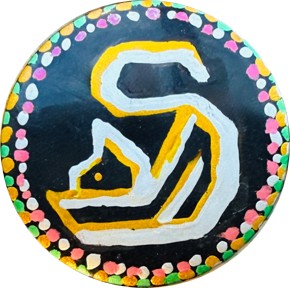
Check out our ALPHACAT buttons and place your custom order today!
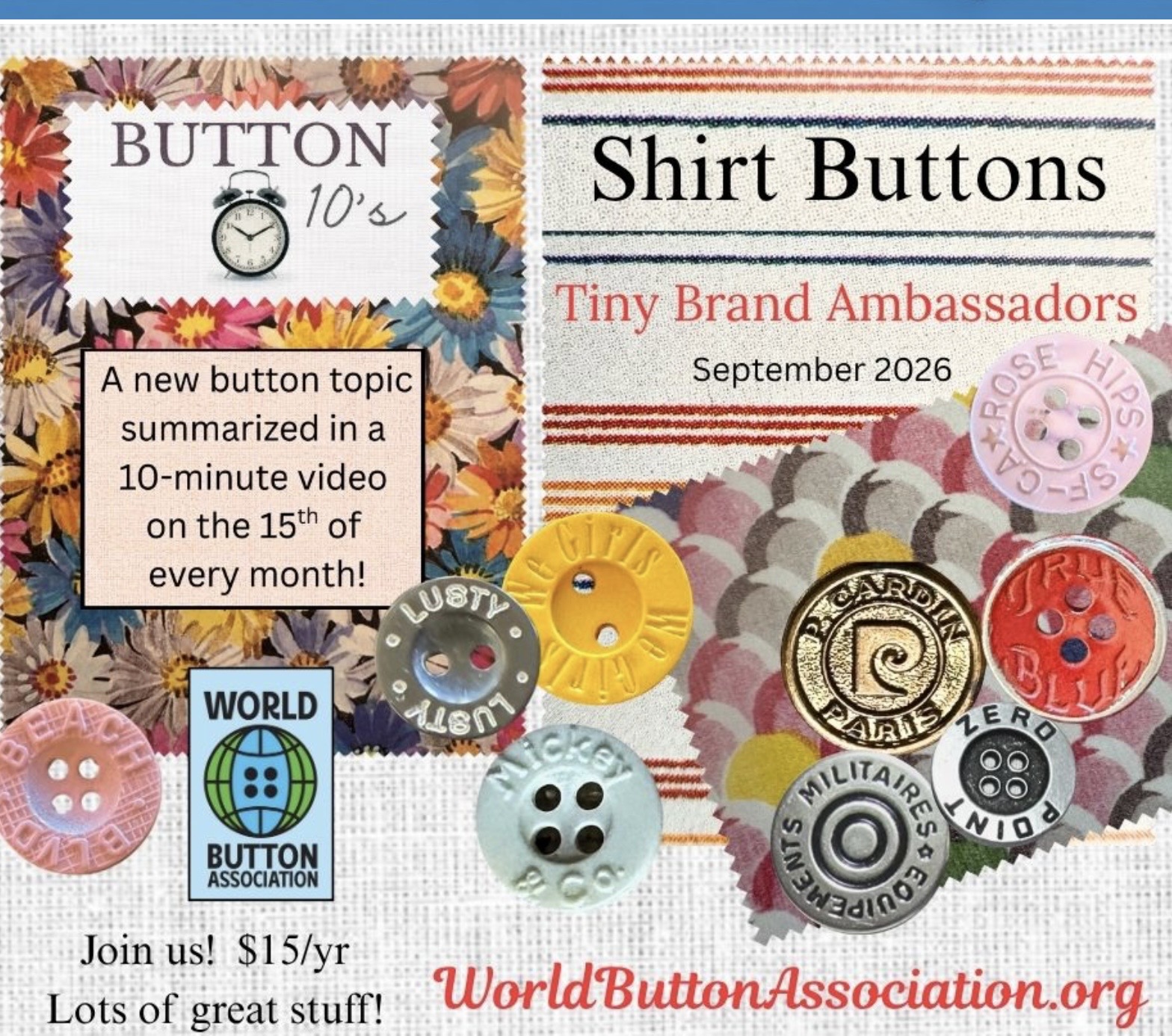
BUT-10 Video Release: SHIRT BUTTONS
Enjoy this quick introduction to the BIG WORLD of little shirt buttons. Click HERE or the image to reach all the But-10 videos.
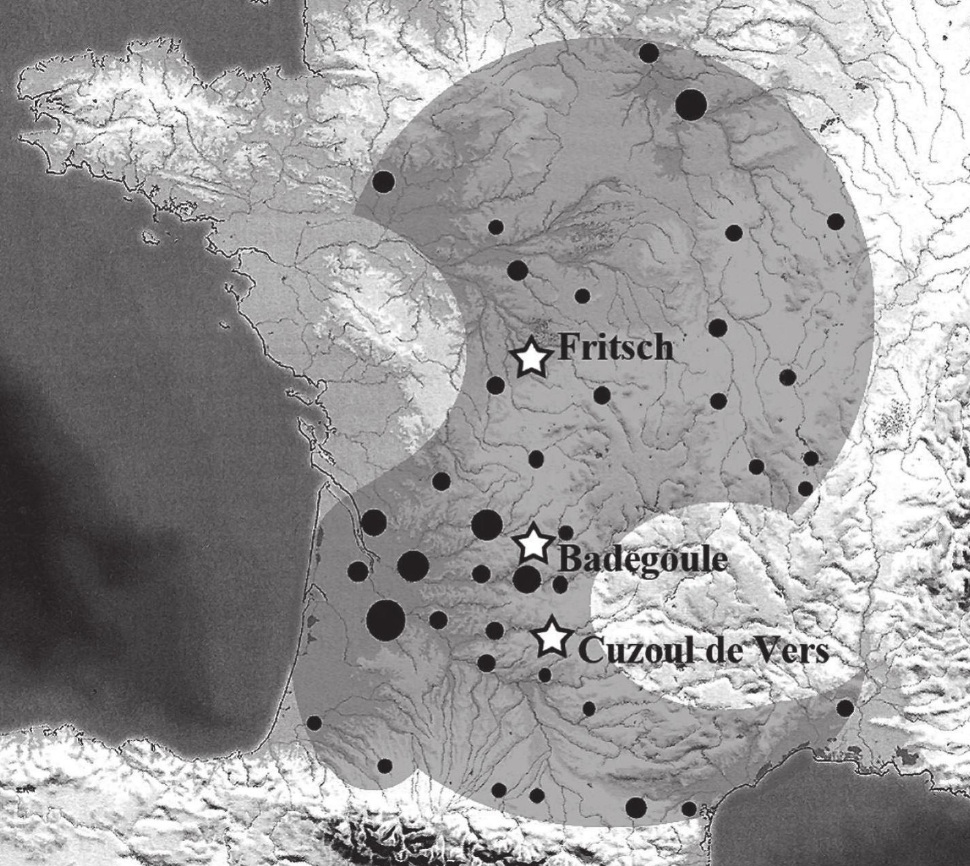
When Did Sewing Begin?
Eyed needles were studied from Paeleolithic rock shelters in France. Sewing is said to indicate substantial social, cultural and technological implications for the daily lives of humans, beginning with the processing of hides, tendons and plant fibers, with development of tools for sewing these materials.
Palaeolithic human groups wore garments and footwear, carried backpacks and containers, and lived under tents and covers. Interested in reading more?
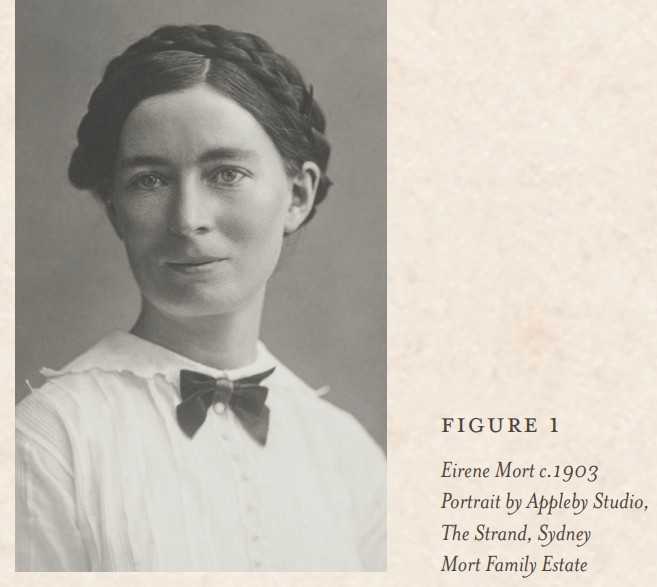
Australian Artist, EIRENE MORT
submitted by Deborah Zinn 2026
In 2017 the Canberra Museum and Gallery in Australia exhibited the work of Eirene Mort. “This year marks the 40th anniversary of Eirene Mort’s death at the age of 98, a fitting time to consider her life and work. Thanks to a generous gift from her heirs Canberra Museum and Gallery is well endowed with artefacts from Mort’s art practice.”
This exhibit contained six ceramic buttons c.1900–1910 in a style resembling the Satsuma buttons of Japan. These include an emu, kookaburra, lyrebird, and kangaroo …. READ MORE HERE.

- Fish Scale Buttons
- Fish Scale Finish
- Foil
- Fruit Pit Buttons
- Gilt Buttons
- Norwalk Pottery
- Nut Shell Buttons
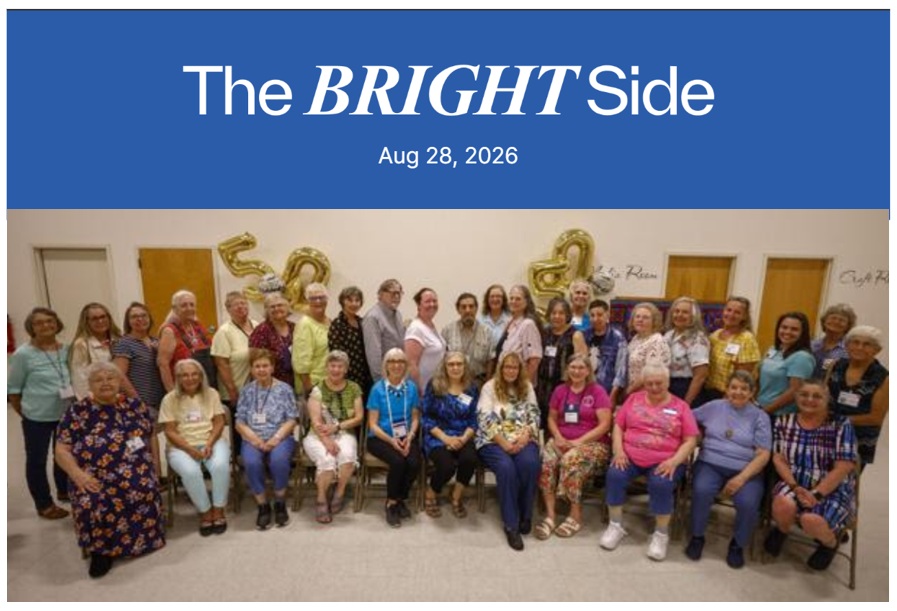
Congratulations to the Black Hawk Button Club on their 50th anniversary and feature article in The Waterloo Courier!
Fasten-ating: Black Hawk Button Club marks 50-year anniversary
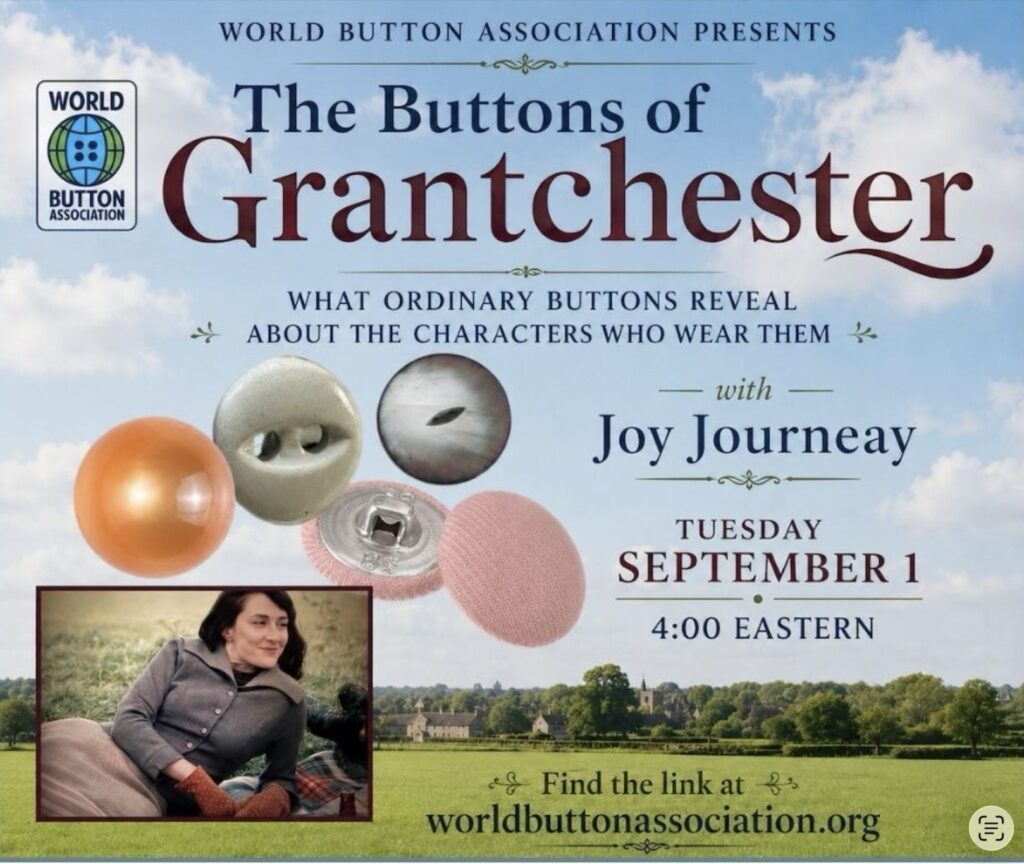
If you missed the presentation on The Buttons of Grantchester, the video is available for viewing. One correction: it is 4.4 KILOMETERS to the heart of Cambridge from Grantchester, not miles. See the video here.
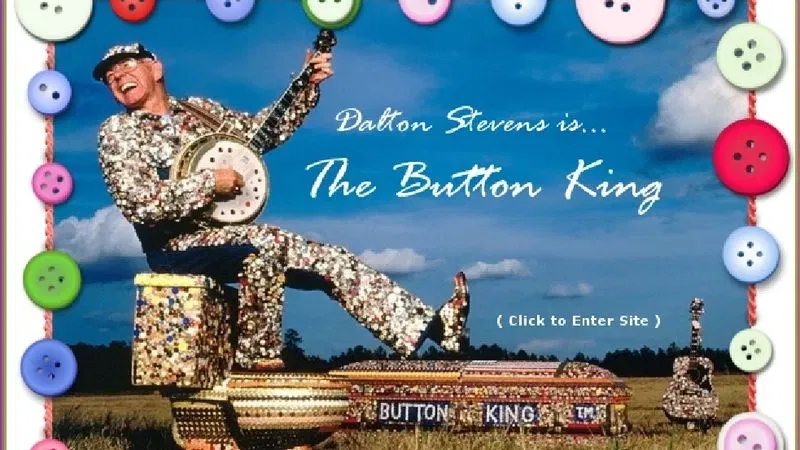
The Button King Museum
by Sylvia Liszka Durell
The Button King Museum of Bishopville, South Carolina, recently became a WBA Affiliate organization.
As a button collector, Dalton Stevens’ museum had been on my list of places to visit for quite a while. A few years ago, I finally took a detour … … read more.
WBA WELCOMES AFFILIATE MEMBERS
The World Button Association is proud to be affiliated with others in the button community who share our passion for both buttons and connecting button lovers and creators. As knowledge of WBA continues to grow, we are confident that the number of affiliates available to our WBA members will continue to grow. One immediate benefit for our members will be the links to several “virtual” online button museums! Enjoy exploring their button collections! We know you will appreciate the work they have gifted to the love of buttons. Find our Affiliate Directory under the MEMBERSHIP tab on the WBA website.
Debbie Allnutt, WBA President




NEW VIDEO
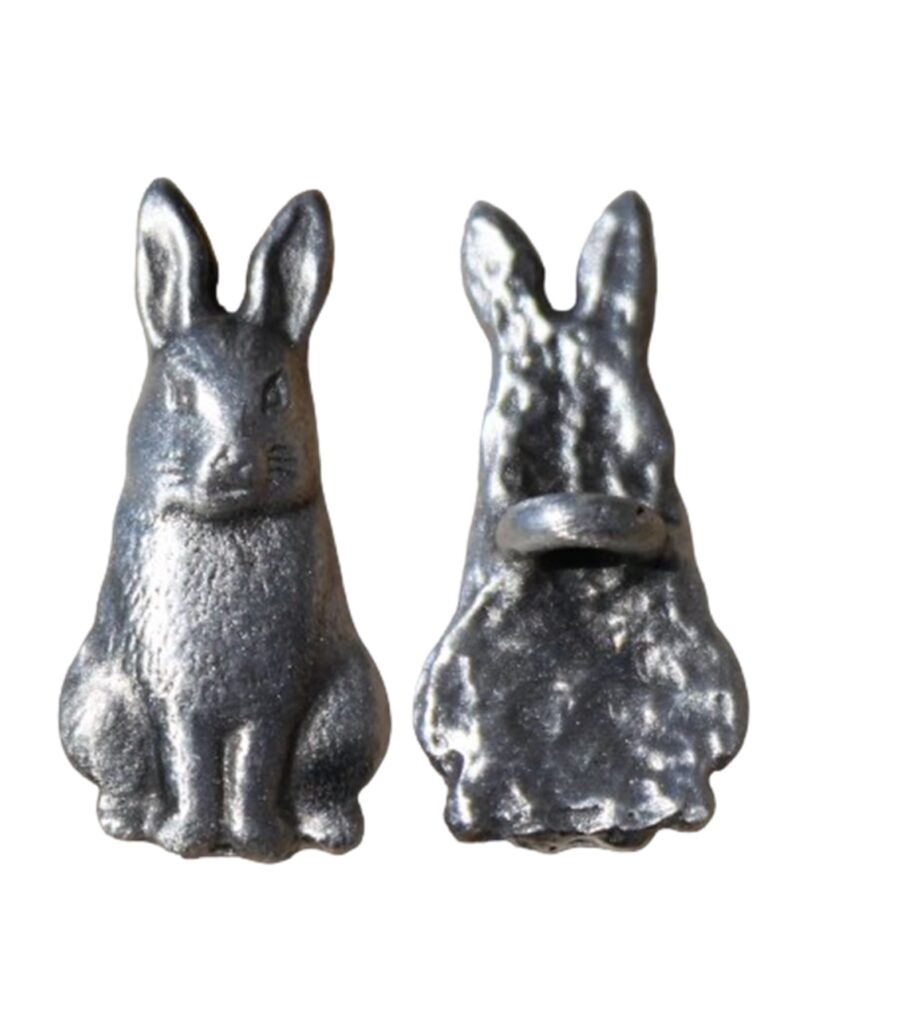
Selecting Buttons with MAMMALS
for a Display Card: one person’s process
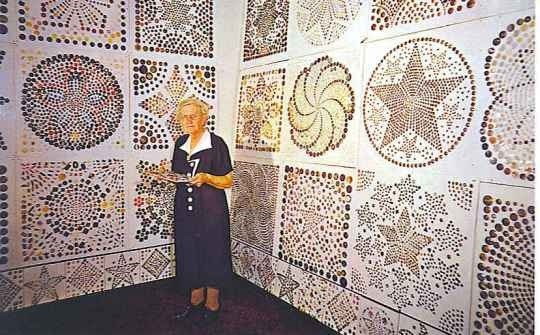
Frieda Warther: An Ohio Woman I Admire by Sylvia Liszka Durell
Frieda Warther was a button artist whose medium was thousands of buttons in her collection. She artistically showcased her collection by mounting the buttons on large panels in intricate designs. Many of the designs resemble quilt and mandala patterns. Read the rest of the article and see the video …
Four New Recordings to be Viewed at Your Convenience
- 16th Century Fashion, Ariella Hostetter
- SUMMERTIME Creative Expressions with Gina Barrett
- Introduction to the Fashion Workshop mobile learning mission, Qristy Kurtz
- A Visit to the Ernest Warther Museum & Gardens with Sylvia Liszka Durell

37 more buttons have been added to the World Button Gallery (scroll down the About WBA page)
Elaine Williamson joined WBA Market
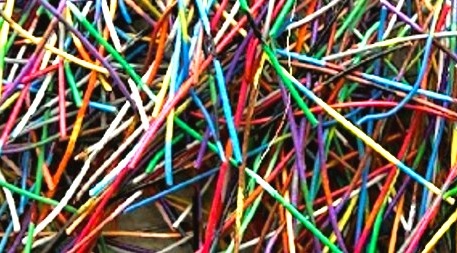
Members asked that BUTTON WIRES be sold in the WBA MARKET. Two dealers offer wires to safely mount your buttons: Connie Weiser or Joy Journeay.
What’s New in the ENCYCLOPEDIA
HART, SCHAFFNER & MARX
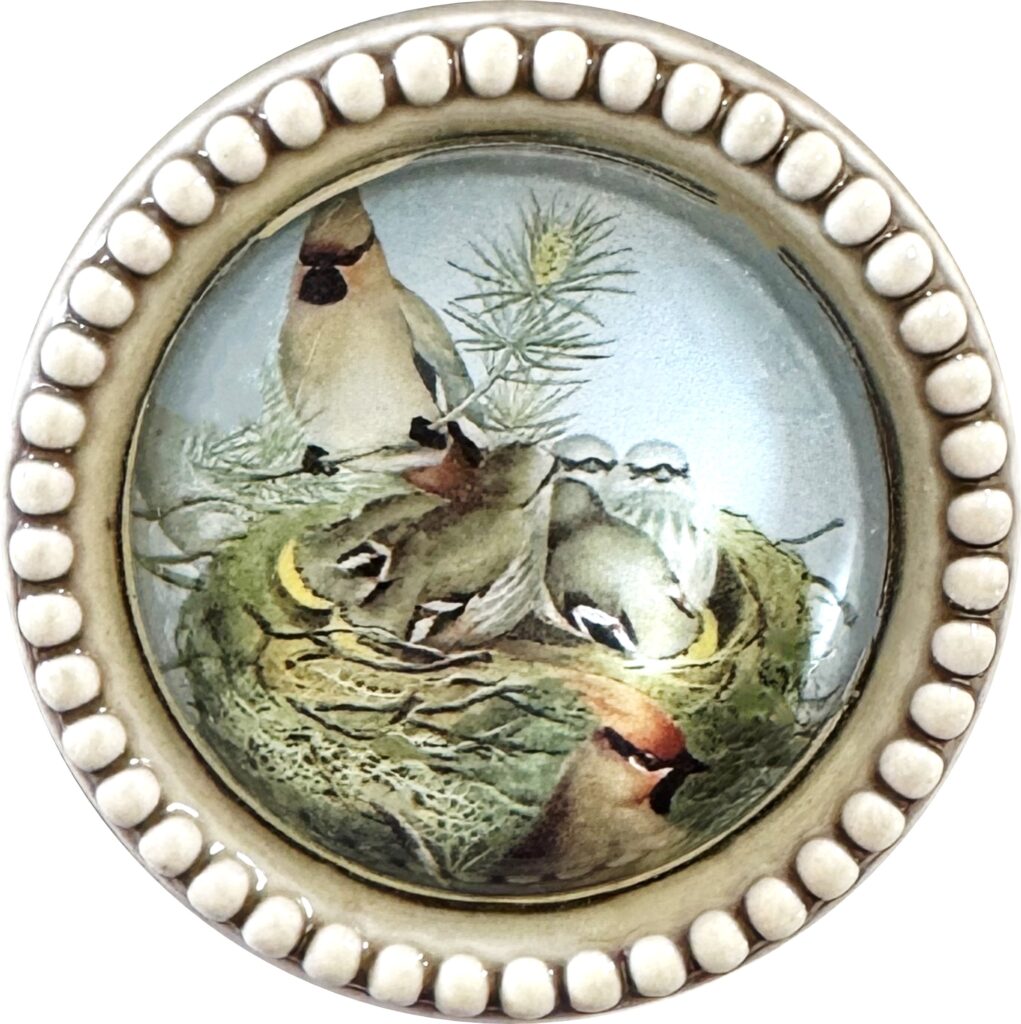
SUSAN CLARKE ORIGINALS
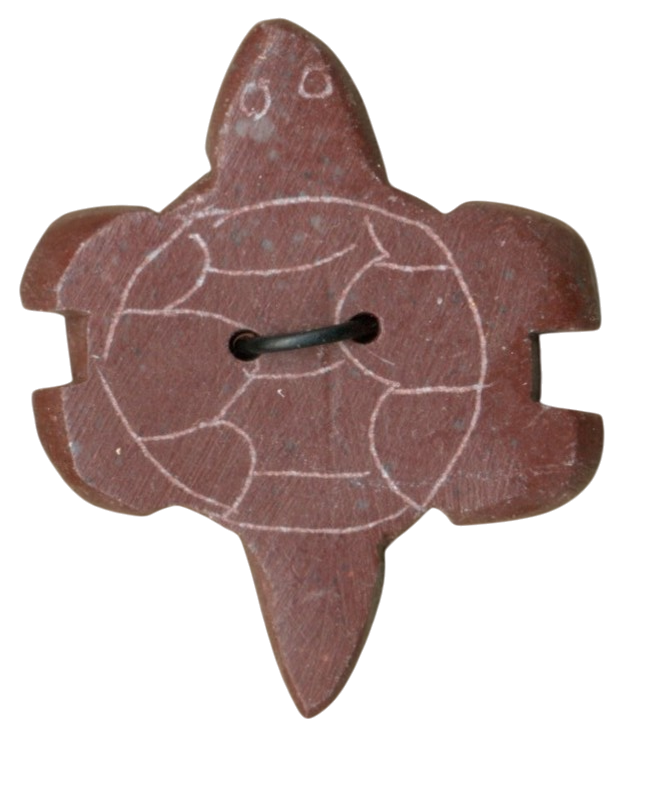
PIPESTONE
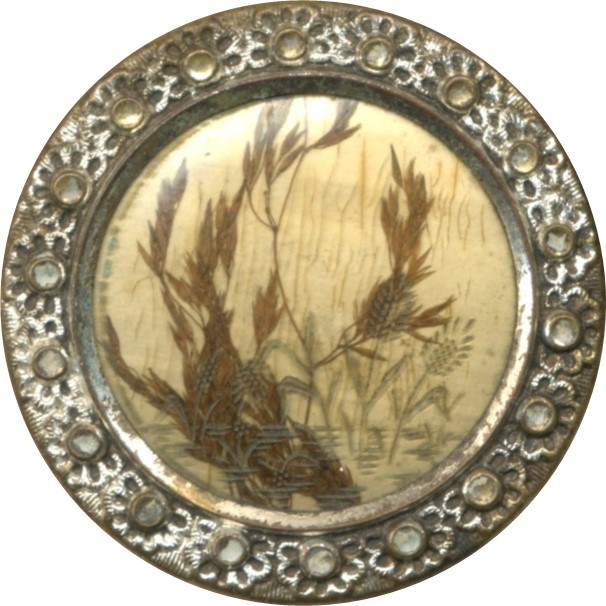
ENCASED
STOCKWELL CERAMICS
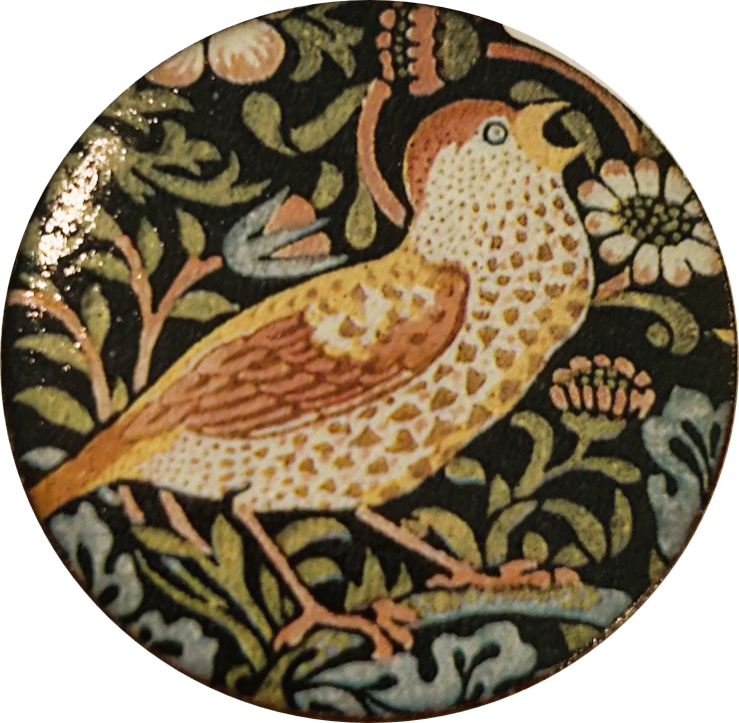
WAISTCOAT – WESKIT
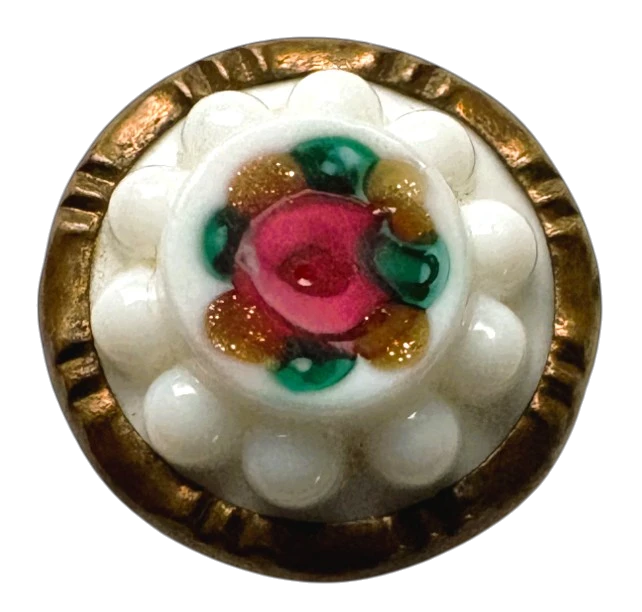
SHELL DISC TRIM
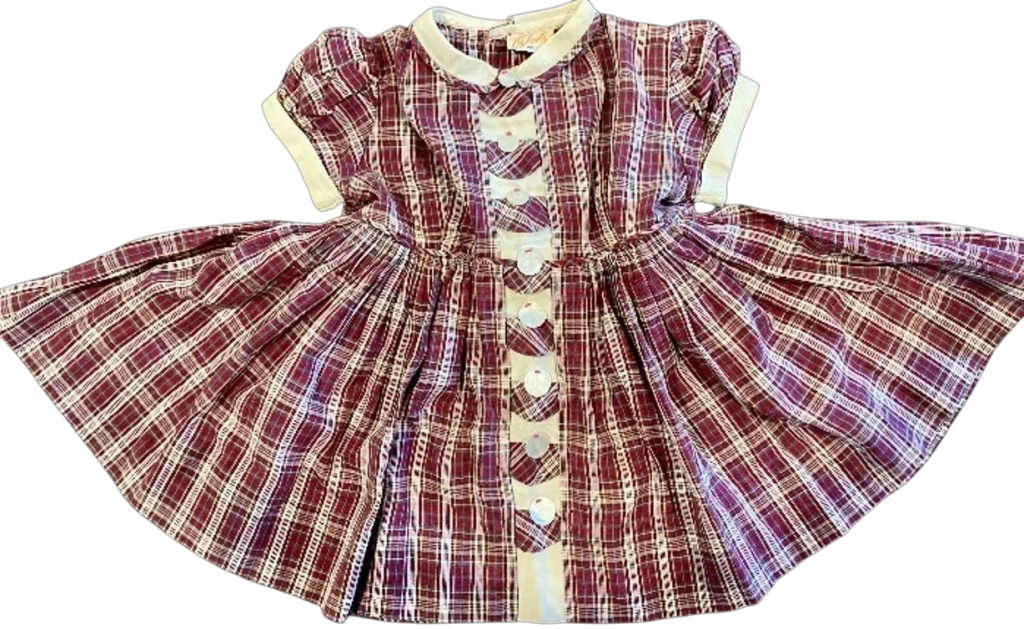
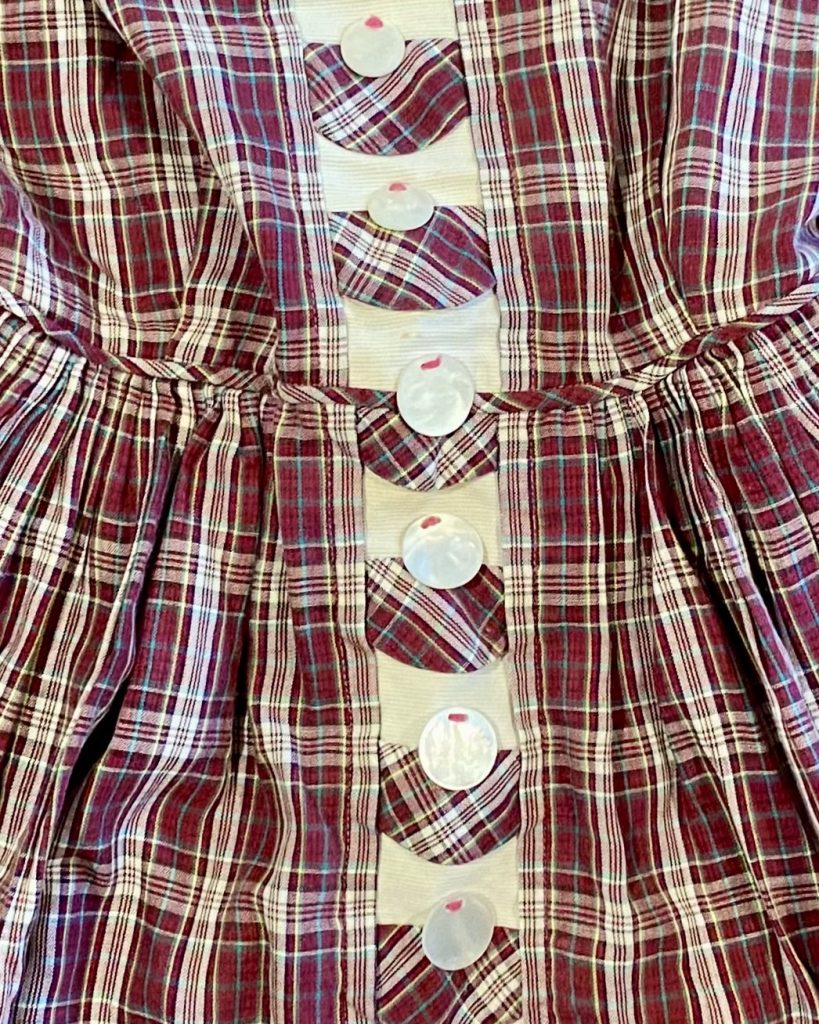
BUTTON CLUBS … WHO NEEDS THEM? by Debbie Allnutt
Many years ago when I was editor of the Texas bulletin, way before everything was online, it was common for state editors to send each other a copy of their state’s bulletin. Each bulletin contained the goings on of clubs, wonderful articles, and inspiring ideas. It was impossible to keep all those issues, so I began to cut out articles I wanted to keep and filed them in notebooks. As I sat down to write to you WBA members this month, I realized I had seen before the topic that was on my mind. I dove into those notebooks and sure enough, the topic had been written beautifully. I asked the author for permission to share it with you. Read more …
LOGO I.D. NEEDED
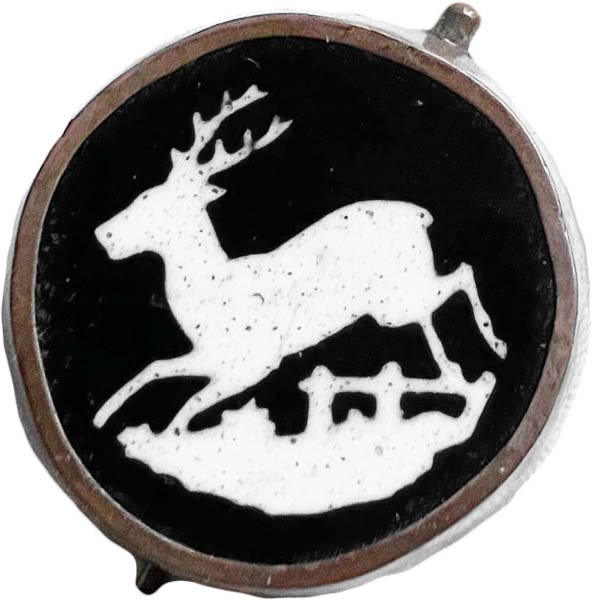
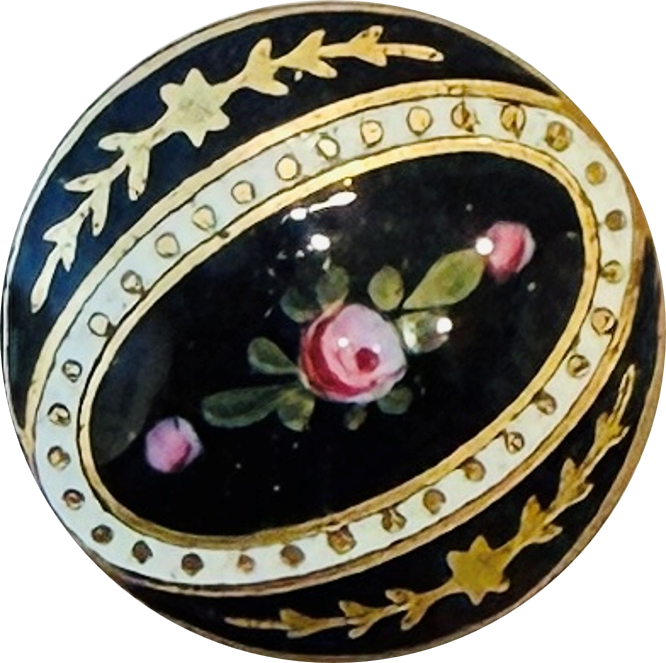
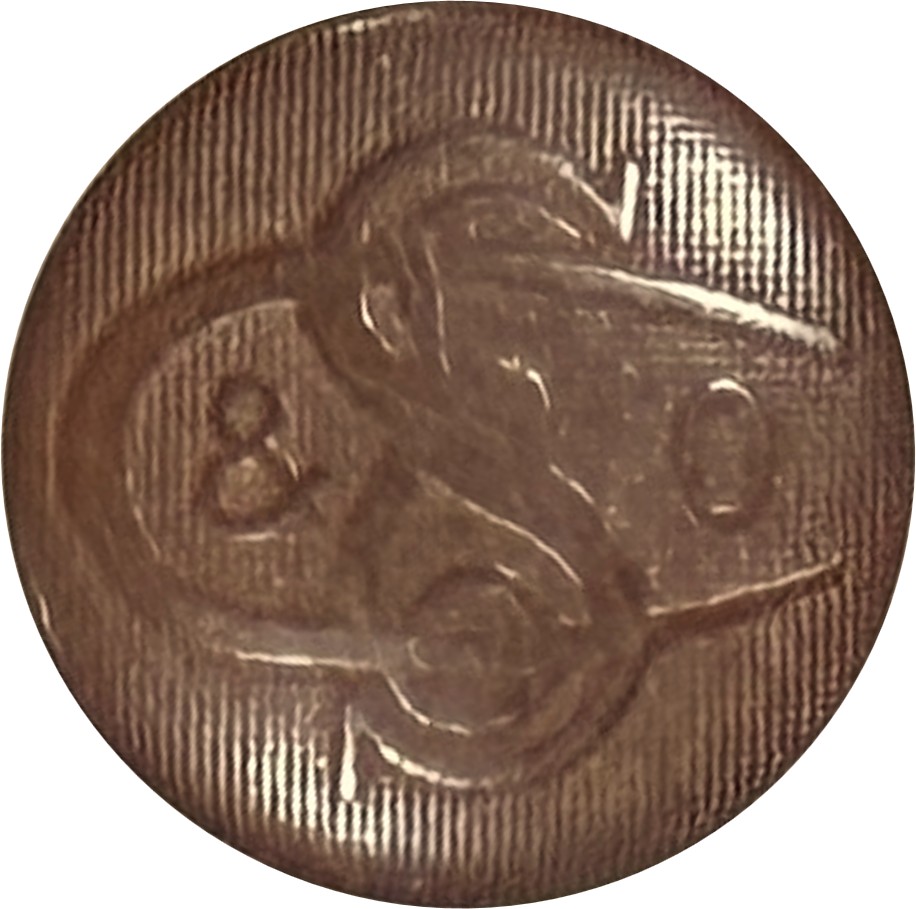
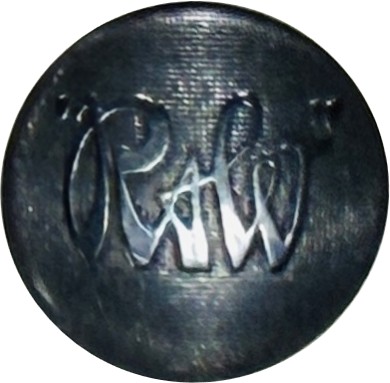
Have you seen this logo on your pressed and dyed corozo (vegetable ivory) buttons? Do you know what comany it represents? We believe one says SE&Co. and the other is R&W.
Send a note on the contact form if you can identify its company! Thanks for your help.
CARBORUNDUM BUTTONS added to the WBA Encyclopedia
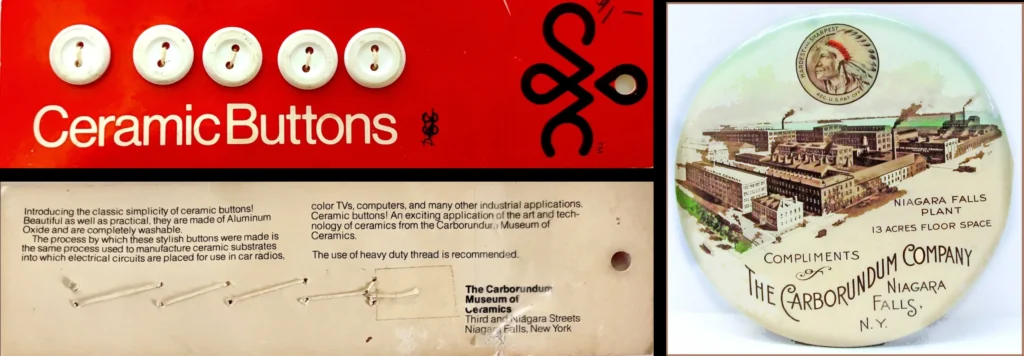
The Carborundum Company was founded in 1891 by Dr. Edward G. Acheson in Monongahela P … These 1.59cm (5/8”) white ceramic buttons were sold originally at the museum. … Carborundum ceramic buttons would be similar to the Diamond-Z zirconia ceramic buttons made later by Coors (see Zirconia buttons). Both materials .. Read more …
Fashion Forward:  Interdisciplinary Approaches to Ancient Apparel
Sunday - Monday, July 19th - 20th, 2026
THIS FREE ONLINE CONFERENCE explores the deep-rooted history of fashion, from basic clothing to expressions of community and human creativity via dress and adornment. Read more ....
DISCOVERING THE SOURCE OF A BUTTON — Marcia Raymond
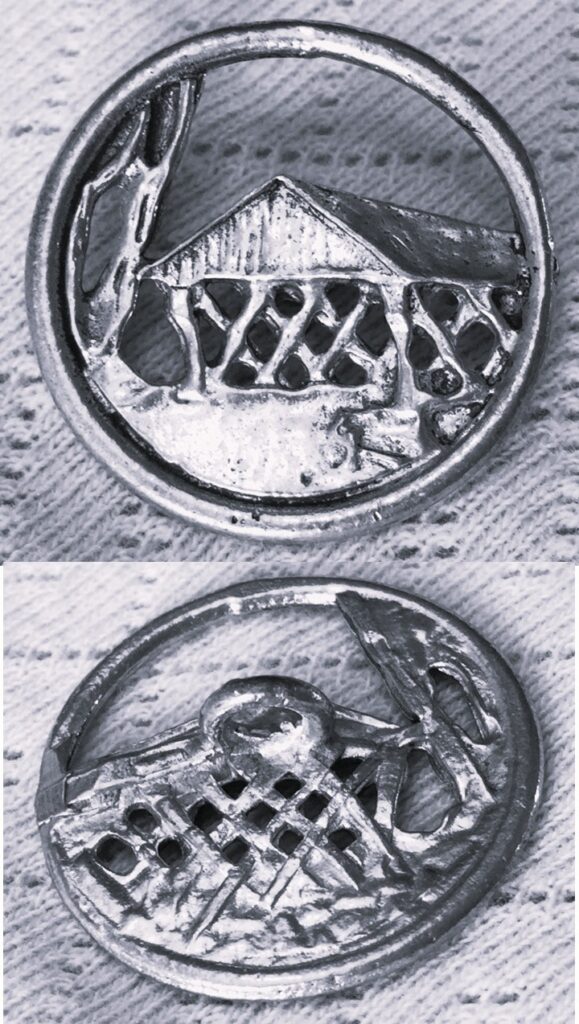
I am new to button collecting and was thrilled to discover information on my pewter covered bridge button in the WBA encyclopedia. I then researched more on line. Read more …
Recording Added July7
WBA RECORDINGS added
Check under the EDUCATION MENU for these new VIDEOS
- BUTTONS IN BLOOM by Joy Journeay
- STEWARDSHIP OF YOUR BUTTONS by Jocelyn Howells
- BUTTONS IN THE HOME with Gina Barrett
- MYTHICAL MAKES with Gina Barrett
- NEEDLES – Their History & Storage with Trudi Jacobson
- BLACK GLASS TILE BUTTONS with Joy Journeay
- TALL TEXAN LAPIDARY BUTTONS with Joy Journeay
MOUNTING SHEETS coming in July
One survey request was that WBA offer mounting sheets for member use in creating button displays. A selection will be added to our EDUCATION menu in July. Also, Gina Barrett adds a new mounting sheet each month on the Creative Expressions page.
If you are willing to share your favorite mounting templates, please contact WBA and we will add them to the group.
New WBA Encyclopedia Entries
CELLULOID SHANKS – Three types of celluloid shanks appear on buttons: the omega, the “U”, and the bubble. Read more …
DEMOULIN BROTHERS & CO. (manufacturer) operated in Greenville IL since 1892. During both World War I and World War II they made uniforms for the US military. Read more …
E N FOOTE & CO. of Northampton MA was founded in 1857 and employed 75 to 120 employees. They were the first Northampton factory to use steam power exclusively, but not the first to make buttons. Read more
The THUNDERBIRD is a mythical being revered in Native American culture for 4000 years. He is believed to be an invisible spirit, flashing his eye to create lightning and beating his wings to make thunder. Read more …
TILE BUTTONS Old glass buttons were molded with depressions on the top of the button which could be decorated with an inset or inlaid single piece of decorative material (like pearl, fabric, metal, colored glass, or another piece of black glass), or with glass frit or powder to be melted at high temperatures into the glass button. These are usually black glass and Read more —